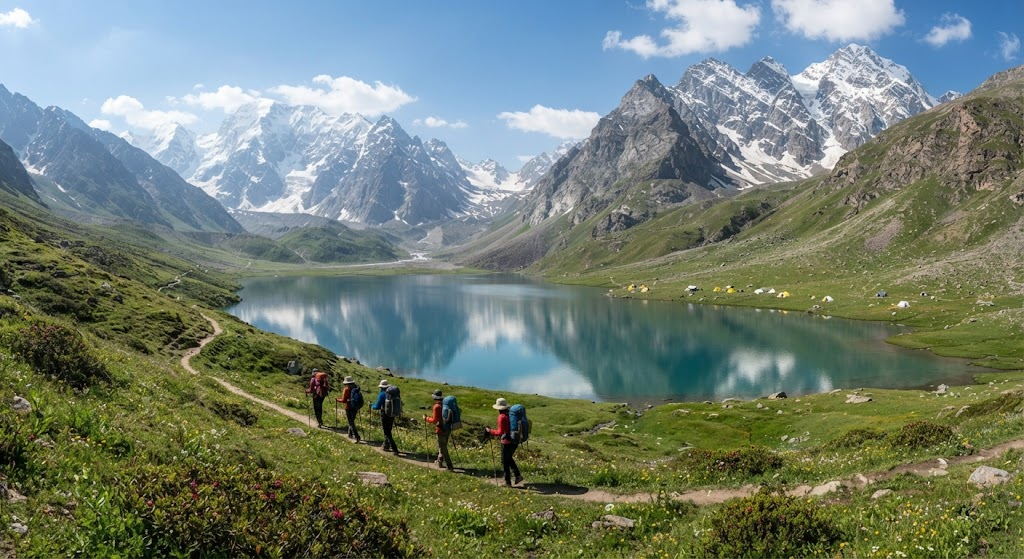
Imagine walking through giant green fields while fresh mountain streams flow right beside you. Cold air kisses your cheeks as high snow peaks rise into the blue sky. This is not a dream world from a picture book—it is the real experience waiting for you on the tarsar marsar trek.
High up in the mountains of Kashmir, this path takes you to twin alpine lakes that look like bright blue gemstones hidden between giant cliffs. Camping right next to these clear waters is a feeling you will remember forever. If you love nature, quiet trails, and broad open views, this adventure offers an incredible slice of heaven.
Let us explore everything you need to know about this classic journey, from preparing your gear to enjoying every mile on the mountain path.
What Makes the Tarsar Marsar Trek So Special?
The tarsar marsar trek stands out because it offers rare peace and secluded campsites. Unlike busier routes, this journey gives you room to breathe and soak in nature without loud crowds. You spend days walking across soft valley floors, crossing clear streams, and sleeping under star-filled skies.
Another reason people love the tarsar marsar trek is the ever-changing landscape. One morning you are walking through thick pine forests, and by afternoon you are standing near high alpine shores. The twin lakes, Tarsar and Marsar, display shifting colors depending on how the sunlight hits the water.
I still remember my first time setting up camp near the water. Hearing the gentle wind blow over the ridge while sipping warm tea created a sense of calm that no big city can ever offer.
Overview and Quick Facts Table
Here is a simple summary table showing the key details of this high-altitude walk:
| Detail Category | Quick Summary Information |
| Main Trail Name | Tarsar Marsar Trek |
| Location | Kashmir Valley, India |
| Base Village | Aru Valley (near Pahalgam) |
| Total Walking Distance | Around 48 kilometers (30 miles) |
| Maximum Altitude | 13,500 feet above sea level |
| Difficulty Grade | Moderate (Suitable for active beginners) |
| Best Travel Months | July to September |
| Average Trip Duration | 7 Days and 6 Nights |
Understanding the Trail Route and Base Camp
Your adventure on the tarsar marsar trek begins in the quiet village of Aru Valley. Located near Pahalgam, Aru is filled with log cabins, green slopes, and friendly locals who welcome visitors with warm smiles. Spending a short time here helps your body get used to the higher elevation before you hit the trail.
From Aru, the pathway leads up along the sparkling Lidder River. You pass traditional shepherd huts made of mud and wood where local Gujjar families spend their summer months. The trail builds gradually, making the starting days gentle on your legs and lungs.
Step-by-Step Way: Living in the Wild
Walking the tarsar marsar trek means taking things one step at a time. Here is how a typical day unfolds along the path:
- Morning Walk: You wake up to cold air, eat a hot breakfast, and set off through pine groves or wide meadows.
Trekhievers - Midday Rest: Around noon, you stop near a mountain stream to rest your feet, drink fresh water, and enjoy lunch.
- Afternoon Reach: You arrive at your next campsite by afternoon, setting up tents before the evening chill sets in.
- Sunset Wonders: Watching the sun dip behind huge granite cliffs turns the sky into shades of orange and purple.
This steady rhythm makes long walking days feel natural and deeply refreshing.
The Magical Lakes: Tarsar, Marsar, and Sundarsar
The true highlights of the tarsar marsar trek are the three high-mountain lakes you visit along the way. First comes Tarsar Lake, an almond-shaped body of water where you can actually camp right on the grassy shore. Waking up to mirror-like reflections on the lake is an unforgettable memory.
Next is Sundarsar Lake, a smaller but equally stunning body of water surrounded by wildflower patches during summer. Finally, you reach a high pass to overlook Marsar Lake. Marsar is often shrouded in mist and clouds, giving it a mysterious, untouched feel.
Each lake has its own special mood, making every day of walking feel like entering a new world.
Best Time to Plan Your Mountain Journey
Timing is everything when you plan to join the tarsar marsar trek. The best window runs from July through September. During early July, snow patches still cover the higher passes, giving the landscape a striking white contrast.
By late July and August, the snow clears to reveal vibrant green valleys carpeted with wild pink, yellow, and blue flowers. September brings crisp, clear air and golden brown grass, offering brilliant conditions for taking photos.
Avoid winter and early spring months because heavy snow blocks the high passes and makes camping unsafe.
How Difficult Is the Path?
People often ask about the effort needed for the tarsar marsar trek. Overall, it is rated as a moderate journey. There are no technical climbing sections or dangerous steep drops that require ropes.
However, you will walk about 5 to 7 hours each day over varied terrain, including grassy fields, rocky stretches, and boulder fields. The altitude reaches up to 13,500 feet, which means the air is thinner and walking takes more energy. With decent basic fitness, most healthy adults and active kids handle the distance well.
Training and Preparing Your Body
To enjoy the tarsar marsar trek without sore muscles, start preparing a few weeks before your trip. Simple daily habits make a huge difference once you hit the trail.
- Cardio Exercises: Practice light jogging, brisk walking, or cycling for 30 minutes a day to build stamina.
- Leg Strength: Do simple bodyweight squats and lunges to strengthen your knees and thighs for uphill climbs.
- Stair Climbing: Use stairs whenever possible while carrying a light backpack to prepare your back and legs.
- Hydration Habit: Practice drinking plenty of water daily so your body stays properly hydrated during the trek.
Trek The Himalayas
A little preparation ensures you spend your time taking photos and smiling rather than struggling for breath.
Essential Gear Packing Checklist
Packing smart keeps you warm, dry, and comfortable along the tarsar marsar trek. Because mountain weather changes quickly, dressing in layers is key.
- Sturdy Footwear: Ankle-support hiking shoes with good grip are essential for rocky sections.
- Warm Layers: Pack fleece jackets, thermal innerwear, and a good down jacket for cold nights.
Trek The Himalayas - Rain Protection: A light poncho or waterproof jacket protects you from unexpected showers.
Trek The Himalayas - Trekking Poles: A pair of walking sticks reduces strain on your knees during long downhill walks.
- Personal Essentials: Bring a headlamp, reusable water bottle, sun hat, and basic skin protection.
Environmental Respect and Leave No Trace Rules
The pristine environment of the tarsar marsar trek stays beautiful only if every visitor cares for the land. It is our collective duty to protect these fragile alpine ecosystems for future generations.
Always pack out all your trash, including food wrappers and plastic bottles. Avoid using harsh chemical soaps directly in fresh river streams or alpine lakes. Treat local shepherd communities and wildlife with kindness and quiet respect. By keeping the path clean, we preserve the pure magic of Kashmir’s mountains.
Final Thoughts on Taking the Leap
Embarking on the tarsar marsar trek is far more than a simple mountain walk. It is a chance to unplug from busy screens, breathe fresh mountain air, and reconnect with simple pleasures. Standing on a high ridge looking down at twin turquoise lakes reminds us how grand and peaceful nature truly is.
If you are ready for an adventure that combines tranquil beauty, fun trails, and unforgettable views, start planning your journey today. Pack your boots, gather your spirit of adventure, and set out to explore Kashmir’s hidden valley!
Frequently Asked Questions (FAQs)
1. Where does the tarsar marsar trek start and end?
The trail begins in the scenic village of Aru Valley, located near Pahalgam in Kashmir. After following a loop through the high mountain lakes, the path descends back down to Aru Valley.
2. Can beginners complete the tarsar marsar trek?
Yes, beginners with good basic fitness can complete the walk successfully. It is helpful to start cardio training a few weeks before the trip to ensure your legs and lungs are ready for daily walking.
3. What is the highest point reached on the tarsar marsar trek?
The highest point on the route is the pass near Marsar Lake, which reaches an altitude of approximately 13,500 feet above sea level.
4. Is mobile phone network available on the tarsar marsar trek?
Mobile signals drop off quickly once you leave Aru Valley. You should expect to be completely off-grid without network connectivity during the mountain walking days.
5. Is it safe to camp near the lakes on the tarsar marsar trek?
Yes, camping at designated sites near Tarsar and Sundarsar is safe and well-organized when travelling with experienced mountain guides. Tents are set up on flat, grassy grounds away from water flow.
6. What kind of food is served during the tarsar marsar trek?
Trek organizers typically provide fresh, hot vegetarian meals that are easy to digest at high altitudes. Meals include porridge, rice, lentils, vegetables, soups, and warm tea to keep your energy high.