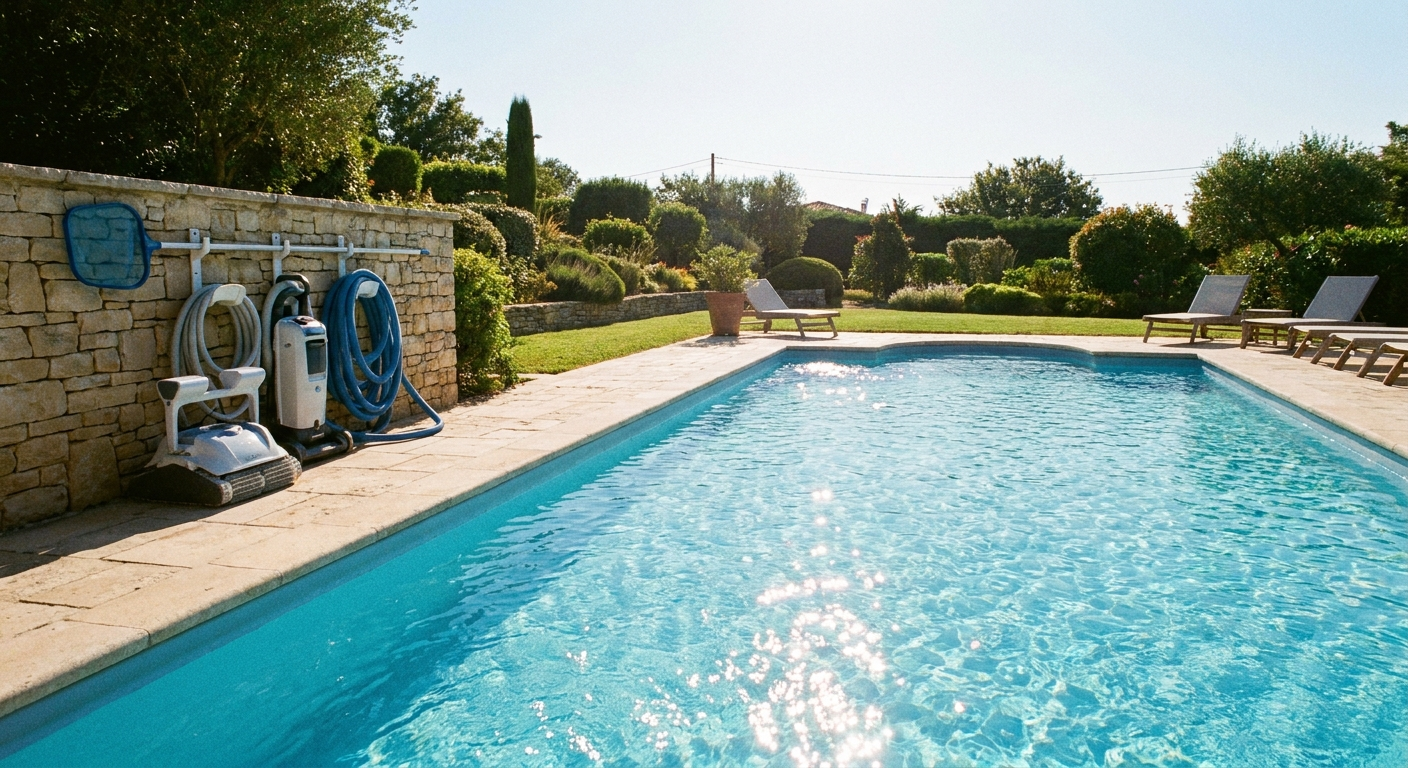
A clean swimming pool is essential for safe and enjoyable swimming.
Without regular maintenance, pool water can quickly turn green and become filled with leaves, dirt, and other debris.
Vacuuming your pool is one of the most important tasks in pool care, and it should be done at least once every one to two weeks during the swimming season.
This guide will explain how to vacuum both inground and above-ground pools effectively.
Before you begin, gather the necessary equipment.
You will need a vacuum head, a telescopic extension pole, a vacuum hose, a skimmer net, and a vacuum plate.
A pool brush is also helpful for scrubbing walls and floors after vacuuming.
Make sure your hose and pole are long enough to reach every area of the pool.
It is important to prepare your pool pump and filter system before vacuuming.
Start by skimming the pool surface with a net to remove large debris such as leaves and sticks. This reduces strain on the vacuum and filter.
Next, check that your pump and filter are running properly.
Empty the pump strainer basket and the skimmer basket to ensure maximum suction power.
If you have a sand or diatomaceous earth (DE) filter with a multiport valve, choose the correct setting.
For a lightly soiled pool, keep the valve on the “Filter” setting.
For a heavily soiled pool or when dealing with algae, set it to “Waste.” The Waste setting sends dirty water directly out of the pool, bypassing the filter.
Be aware that this will lower the water level, so have a garden hose ready to refill the pool as needed.
Step 1: Assemble the Pool Vacuum
Attach the vacuum head to the telescopic pole. Ensure it clicks firmly into place.
Connect one end of the vacuum hose to the top of the vacuum head. Tug gently to confirm a tight connection.
If the hose is slippery, a hose clamp can help keep it secure.
Place the vacuum head and hose into the pool.
Submerge the vacuum head so it rests on the bottom of the pool.
Hold the free end of the hose and slowly lower it into the water, allowing air to escape as the hose fills with water.
You can also place the free end against a return jet to force water through the hose and remove all air bubbles.
Once no more bubbles appear, the hose is full of water.
Now, attach the vacuum plate to the free end of the hose.
Keep your thumb over the opening to prevent air from entering.
Place the vacuum plate over the skimmer basket inside the skimmer. Ensure a tight seal for maximum suction.
If you do not have a vacuum plate, remove the skimmer basket and insert the hose directly into the suction port at the bottom of the skimmer. Tug to make sure it is firmly seated.
Step 2: Start Vacuuming
Begin vacuuming at the shallow end of the pool.
Move the vacuum head in long, slow, overlapping strokes across the pool floor. Overlapping ensures no debris is missed.
Going too fast will stir up dirt and reduce cleaning efficiency. Work your way toward the deep end systematically.
Monitor the pump pressure gauge as you work.
If the pressure rises significantly, stop vacuuming and backwash the filter. For cartridge filters, clean the cartridges as needed.
If the vacuum loses suction, air may have entered the hose.
Disconnect the hose from the skimmer, re-prime it with water, and reconnect it.
If the vacuum head gets stuck, briefly turn off the pump to release the suction pressure.
For pools with heavy debris or visible algae, consider starting the vacuuming process at a slow pace. If the water becomes cloudy, pause and allow it to settle for a few hours before resuming. After completing the entire pool surface, proceed to disassemble the equipment.
Step 3: Disassemble and Clean Up
Turn off the pump and filtration system. Remove the vacuum hose from the skimmer first. Drain any remaining water from the hose.
Disconnect the vacuum head from the pole and the hose.
Rinse all equipment with fresh water from a garden hose to remove pool chemicals and debris.
Allow everything to dry before storing in a shaded, covered area.
If you used the Waste setting, switch the multiport valve back to Filter.
Refill the pool to its normal water level using a garden hose.
Check the pump strainer basket and skimmer basket for debris and empty them as needed.
Backwash the filter if you used the Filter setting during vacuuming.
For a final touch, attach a pool brush to the telescopic pole and scrub the walls and floor of the pool. This removes any algae or dirt the vacuum missed. Afterward, test the pool water chemistry. Check chlorine, pH, and alkalinity levels.
Adjust them as necessary to ensure balanced water that is safe for swimming.
For beginners, learning the proper technique is essential, and a comprehensive guide on how to vacuum a pool can provide all the necessary details.
When to Use a Manual Vacuum
Even if you own an automatic cleaner, manual vacuuming is still necessary in certain situations. Manual vacuuming is effective for removing heavy debris, clearing cloudy water, and treating algae outbreaks. It also allows you to reach corners and tight spots that automatic cleaners may miss.
Vacuuming your pool weekly helps maintain proper water chemistry and prevents filter clogs. It also reduces the need for chemical adjustments. Regular vacuuming, combined with skimming and brushing, keeps your pool clean and inviting all season long.
To keep your pool in top condition, always clean and store your equipment after each use. Rinse the vacuum head, hose, and pole thoroughly. Dry them before storing in a dry, shaded location.
This prevents damage from UV rays and chemical residue, extending the life of your pool care tools.